


.jpg)
When TikTok became a serious opportunity for Leadzai, the idea was simple: bring it into the platform. What followed was weeks of collaboration, testing and problem-solving across teams. Most of that work remains invisible to users, who now experience TikTok as a natural part of Leadzai. But behind that simplicity is a bigger story: a new channel, a new challenge, and a project that grew beyond the original integration.
Here’s a look at what it took to make it happen.
A conversation that led to an opportunity
TikTok wasn't originally part of Leadzai's roadmap for 2026.
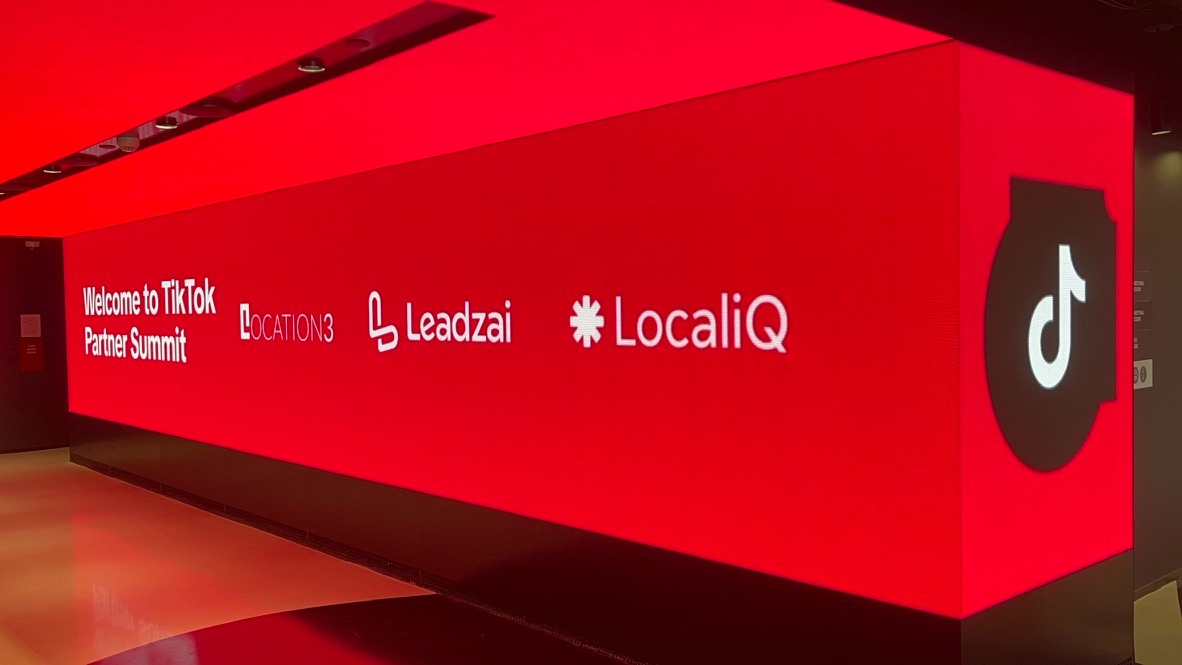
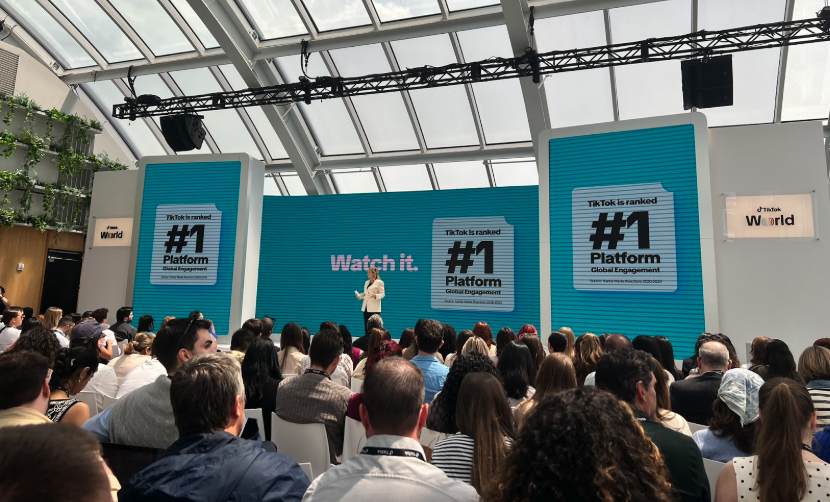
The idea started to take shape in May, when Leadzai was invited to TikTok's first Channel Sales Partner Day and 6th annual global product summit, TikTok World, in New York, alongside a select group of technology partners helping bring TikTok’s advertising capabilities to market at scale. For us, the trip was about more than the conference itself. It was one of the stops on a wider world tour, with meetings across North America, South America and Europe that gave us a broader view of where the advertising market was heading and where we could play a role.
The timing also felt right. Closer relationships with major agencies and platform partners meant Leadzai was already well-connected to businesses looking to reach new audiences and expand their advertising offering. This gave us an opportunity to be part of a growing shift towards new advertising technology and emerging channels.
With agencies and platforms eager to offer new channels and customers already asking for TikTok, the demand was clear. At the time, it was one of the few major advertising platforms not yet available through solutions like Leadzai, creating an opportunity to bring a new network and its growing audience into our platform.
By the time the team reached Siinda in Berlin we decided we would want to move forward with becoming a badged TikTok Channel Sales Partner.
When adding a new network means rethinking what the platform can do
At the beginning, adding TikTok to Leadzai seemed relatively straightforward. What the team didn't know what exactly it would require, especially since, for many of them, this was the first time they were taking a network from the ground up and making it part of the platform.
We worked closely with TikTok throughout the integration, as some of the capabilities required close collaboration with TikTok, including API configurations tailored to the new channel.
In simple terms, APIs allow different software applications to communicate and share information. This was not simply a case of connecting an established system. It meant building a new type of advertising channel, with requirements around location, interests, video and campaign structures, while also introducing video generation, an entirely new area for Leadzai to explore.
For Backend, this meant building the infrastructure for synchronisation, reporting, permissions and data. For Frontend, the challenge was different: how do you introduce something new without making the whole platform feel unfamiliar?
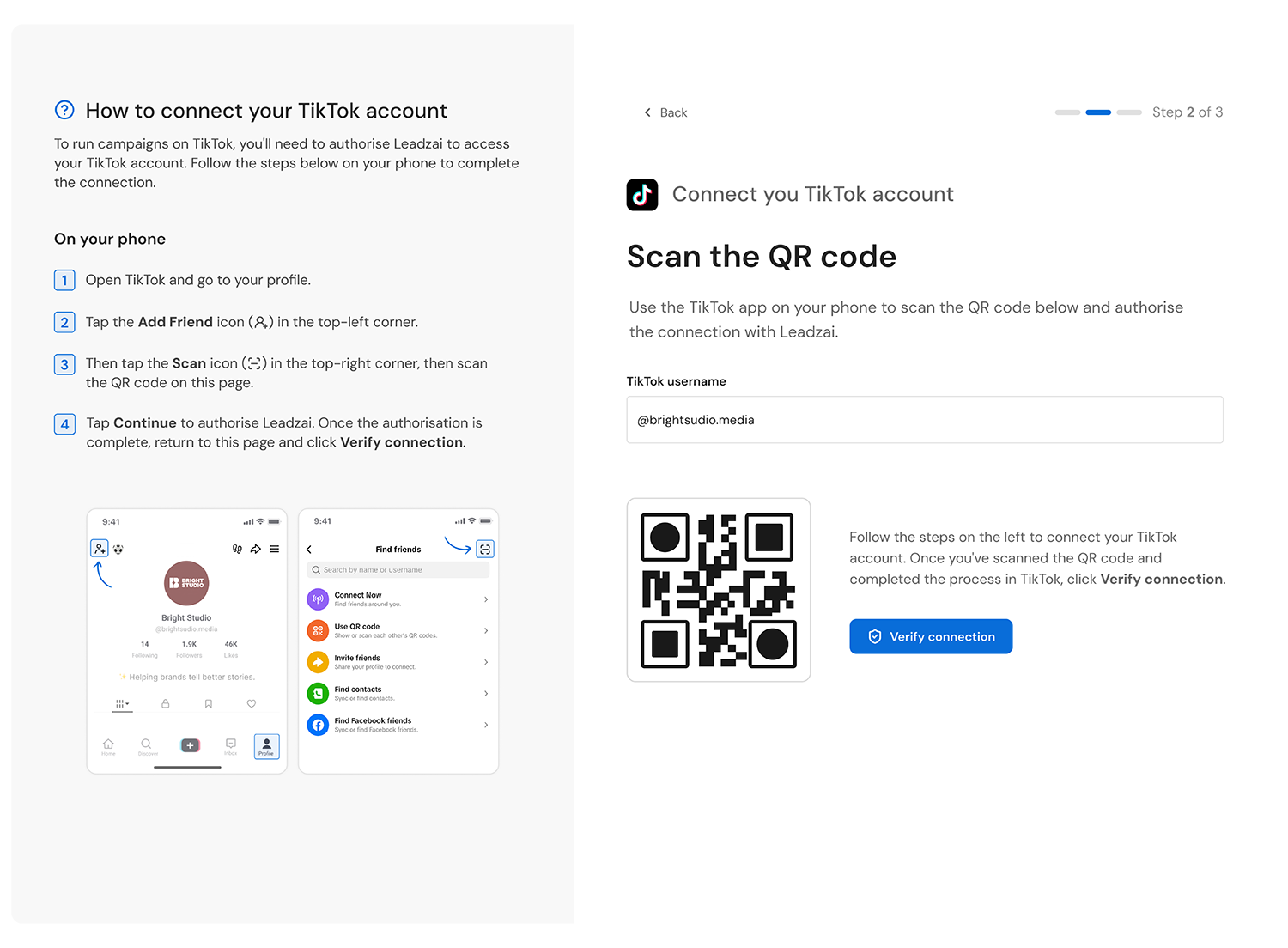
The answer was to keep as much of the existing experience as possible. The team reused UI layouts and interaction patterns while introducing the new experiences TikTok required, particularly the account permissions flow and video generation.
“We tried to keep it simple and very similar to what we already have in the app.”
— Ricardo Mateus, Leadzai’s Software Engineering Lead
Behind that simple experience was a lot of work across the company, with different teams tackling different parts of the project while working alongside TikTok as the integration took place.
When the simple parts weren’t so simple
Adding TikTok meant building new capabilities across the platform including setting up traditional and Smart+ campaigns as well as account linking.
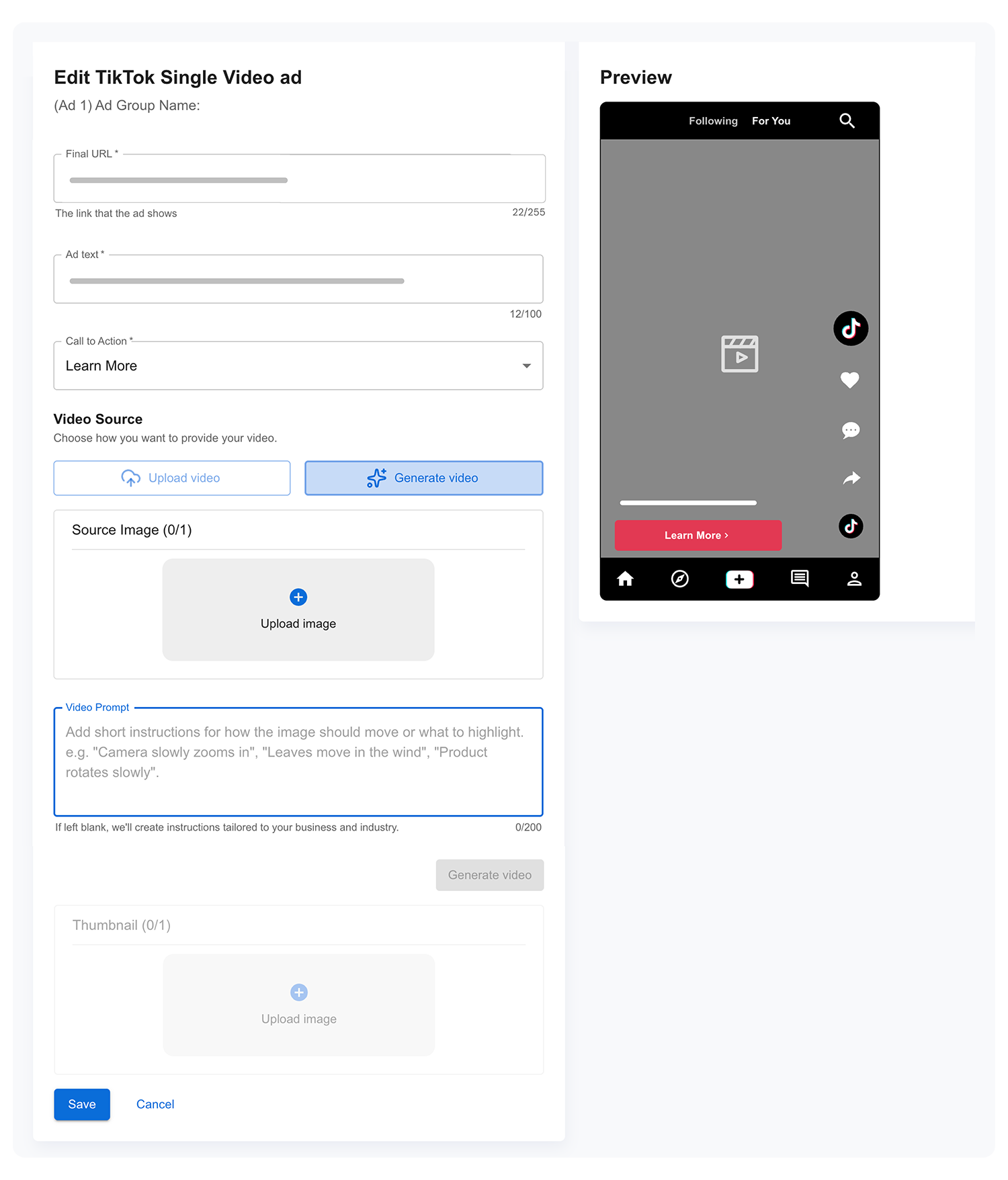
Video generation brought another opportunity. While we already supported video ads, we hadn’t yet introduced video generation. TikTok gave us the opportunity to use AI not just to generate videos, but also to explore how we could make ad creation easier and more useful.
The team was doing more than connecting Leadzai to TikTok, they were also exploring how video generation could help Leadzai support customers throughout the ad creation process.
“A good auto-generation of video is the piece of the puzzle that we have that I feel like no one else has.”
— Pedro Cerdeira, Leadzai’s Chief Product and Technology Officer
This work extended beyond product and engineering. The Business Operations team also had an important role in this launch. As part of the requirements to become a badged TikTok Channel Sales Partner, André Araújo and Miguel Rodrigues, Performance Specialists at Leadzai, completed their TikTok training and certifications. The team also played a key role in testing and monitoring the new network, helping ensure the system performed as expected as we moved through testing and towards launch.
For Bruno Mendes, Leadzai’s AI Engineer, the work also opened up a wider area of exploration around video models and what AI could eventually do within Leadzai. This work went beyond simple image-to-video generation, exploring possibilities that combine ad scripts, video, audio and captions. The Business Operations team brought another perspective to this work, particularly when testing video generation and assessing what makes an effective ad work. That testing is still ongoing, with Pedro Faria, Leadzai’s Performance Specialist, playing a key role in exploring what works best and applying his expertise to the development of video ads. This collaboration between teams helped ensure that what we were building was not only technically possible, but also useful from an advertising perspective.
“AI can generate a video in seconds, but generating an ad that actually works is a different challenge. Our role is to bring the advertising perspective into that process: testing what catches attention, what communicates the message clearly, and ultimately what has the potential to drive results.”
— Pedro Faria, Leadzai’s Performance Specialist
More than another channel
For users, the most visible change is simple: Leadzai is officially a TikTok Channel Sales Partner. But for us, the meaning goes further.
The integration demonstrated that Leadzai's existing product can adapt to support another major advertising network while maintaining a familiar experience for users.
“It proves that our product is flexible enough to support whatever network we want.”
— Pedro Cerdeira
The next step
The launch is only the beginning. There is still more to explore, particularly around video generation and how videos could be created and managed more flexibly. This could potentially make videos reusable across different networks, and unlock new possibilities across the platform.
As Bruno Mendes put it:
“We’ll have new opportunities to build on top of it and make it better.”
The Frontend experience will continue to evolve too. As Livia Schneider mentioned:
“We are already working on a new design, but this is a conversation for the future.”
That is what makes the launch feel less like a finish line and more like a new chapter. TikTok wasn't just about adding another network, it gave us the chance to discover new possibilities and create a foundation we can continue to build on.
“I’m really proud of everything we built. And also the process that led to it.”
— Pierre Riandey, Leadzai’s Software Engineering Lead
For Livia, the project represents another important milestone, showing that the team can take on something new, move quickly and make it happen.
“It represents a big step. It’s like the many steps on the moon. It shows that we can do it. We can do it.”
— Livia Schneider, Leadzai’s Software Engineer
The key takeaways
What does it take to bring a new advertising channel into Leadzai?
In the end, it takes more than connecting two platforms.
TikTok brought a new advertising channel to Leadzai while introducing new capabilities, ideas and opportunities for both the product and the business. It pushed the team into new territory around video and AI, while proving that the existing platform could adapt without losing the experience users already know. But beyond the integration itself, TikTok opened new doors for us, creating opportunities to reach new customers that may not have existed otherwise.
Product, backend, frontend, business operations and the machine learning team stayed closely connected, testing quickly, solving problems and adapting as they went. Combined with a clear plan and a strong existing codebase, that collaboration helped take the project from idea to launch in around three months.
“It shows that we can do it. Not just us as people, but even in product.”
— Pedro Cerdeira
For Pierre Riandey, Leadzai’s Software Engineering Lead, the TikTok integration meant more than only adding code to the codebase:
“It was a great exercise in staying pragmatic and adaptable as the technical requirements evolved. We learned a lot, and still managed to deliver in record time given the team availability during the summer.”
— Pierre Riandey
TikTok is now part of Leadzai, but the real achievement is what it proves is possible next. An opportunity came in, we adapted, built together and turned it into something real. Now, there’s a new foundation to build on.


.jpg)